
The wedding limo passenger list should follow the itinerary, not tradition. So, who rides in the limo for a wedding? A bride may travel with her father or the person escorting her, while the couple, wedding party, parents, or grandparents may ride together at other points in the day. There’s no single etiquette rule, but limited seats and multiple stops can make the choice feel personal.
It’s understandable to want everyone important to feel included while keeping the schedule calm and practical. The most considerate plan reflects your passenger priorities, vehicle capacity, and timing, rather than trying to fit every tradition into one ride.
This guide explains who commonly rides in a wedding limo, how to decide who travels together, and when separate vehicles or trips may make sense. You’ll also learn how to map passengers to each leg of the day, from the trip to the ceremony through photos, the reception, and the couple’s departure. With a clear itinerary and a chauffeured vehicle suited to your group, transportation can feel as thoughtfully arranged as the rest of the celebration.
Key Takeaways
- There’s no fixed answer to who rides in the limo for a wedding. Shape the passenger list around your plans, preferences, and confirmed seating capacity.
- The couple or hosts decide who travels together. Wedding-party members don’t have to share one vehicle.
- Compare one vehicle, separate vehicles, and multiple trips by passenger count, pickup sequence, schedule, and comfort.
- Build the itinerary first, then match passengers and vehicle choice to the ceremony, photos, reception, and return plans that apply.
- Before choosing a vehicle, confirm its passenger capacity, chauffeur service details, itinerary, and any included services.
Who rides in the limo for a wedding? The usual choices
There’s no universal answer to who rides in the limo for a wedding. The passenger list depends on the couple’s plans, the vehicle’s confirmed seating capacity, and who they’d like to share each part of the day with. Common choices include the couple, selected members of the wedding party, and close family members, but no group is automatically entitled to a seat.
Traditions can offer inspiration, not a binding rulebook. Some couples prefer a private ride together; others use chauffeured transportation for attendants or relatives going to a particular stop. The vehicle itself may also affect the arrangement: the word limousine covers a range of vehicle forms, so confirm the specific vehicle and passenger capacity rather than relying on its label.
Customary doesn’t mean required: the couple, wedding party, and close family are all possible passengers, but the couple or hosts decide who rides based on the plan.
Do the couple ride together in the wedding limo?
Riding together is common, especially for a trip after the ceremony or a final departure, but it isn’t required. Ceremony timing, a first-look plan, or a preference for separate arrivals may mean the couple travels separately for part of the day. They can still coordinate a shared arrival by agreeing on the location, timing, and who should be in each vehicle for that leg.
Can the wedding party or family ride with the couple?
Yes. Selected attendants or relatives may join if the vehicle’s verified capacity and the itinerary make it comfortable and practical. The maid of honor or best man might be included, as might a parent or grandparent, but none is an automatic passenger. A full wedding party may need a different arrangement from a small group, particularly if pickups happen at separate locations or everyone needs to arrive on schedule.
Be specific when sharing the plan. Tell each passenger which ride they’re assigned to, where they’ll be picked up, and whether the arrangement changes after the ceremony. Clear communication helps prevent relatives or attendants from assuming they’re included, and gives the transportation provider an accurate passenger list. The goal isn’t to satisfy every tradition at once. It’s to create a considerate plan that fits the day.
Wedding limo etiquette: who should be included, and who decides?
The couple or hosts set the passenger plan according to the event, not a universal etiquette rule. They may prioritize people who need a ride to arrive on time, relatives who would benefit from a coordinated trip, or attendants assigned to a particular part of the day. The question of who rides in the limo for a wedding is best answered by looking at the itinerary and passenger needs, rather than assuming every wedding-party member should have the same arrangement.
Etiquette can offer useful perspective, but it shouldn’t turn seating into an obligation. Even guidance on wedding transportation etiquette is a starting point for thoughtful planning, not a substitute for the couple’s own circumstances. Wedding transportation etiquette offers guidance, not a mandatory seating rule.
Does everyone in the wedding party need a limo seat?
No. Couples can arrange a ride for selected attendants without putting the entire wedding party in one vehicle. If the party is larger than the vehicle’s confirmed seating capacity, consider separate vehicles or another arrangement that fits the schedule. A vehicle’s appearance or name doesn’t confirm how many people it can comfortably accommodate, so verify capacity before assigning seats.
It can also make sense to group passengers by pickup location or destination rather than by wedding-party role. For instance, attendants needed at an early photo location may travel together, while others follow a different plan. This keeps transportation practical without suggesting that one vehicle must serve everyone.
How can couples make passenger choices feel considerate?
Start with need and timing, then consider comfort, accessibility, relationships, and the order of the day’s events. A relative who needs accessible transportation or an attendant who must arrive early may take priority for a particular trip. These considerations help explain the plan without ranking people by importance.
- Identify who needs a ride for timing, accessibility, or itinerary reasons.
- Match passengers to each trip based on pickup order, destinations, and confirmed seating.
- Communicate arrangements early and directly to attendants and family members, including where they’ll be picked up and when they should be ready.
- Offer a practical alternative when someone isn’t assigned to the limo, without presenting separate transportation as a slight.
Clear communication is part of considerate planning. Tell each person which transportation arrangement applies to them, and update them if the schedule changes. If chauffeured transportation is part of your plan, you can review wedding limousine services from Mex Limo Worldwide Chauffeured Service as one option for coordinating passengers around the itinerary.
One wedding limo or several vehicles: compare the practical options
The right setup depends on more than the guest list. Match each group’s confirmed seating capacity with its departure time, pickup sequence, destinations, and comfort needs. A useful planning principle is simple: let the passenger list shape the vehicle plan, not the other way around. The Knot’s advice on who rides in the wedding limo can help frame the etiquette, while the itinerary determines which arrangement works in practice.
| Option | Passenger count and comfort | Schedule and pickups |
|---|---|---|
| One shared vehicle | Works for a group that fits the vehicle’s verified capacity and is comfortable traveling together. | Best when passengers share a departure time, pickup plan, and destination. |
| Separate vehicles | Allows groups to travel in vehicles suited to their individual needs and passenger counts. | Useful when departures, pickup locations, or destinations differ. |
| Multiple trips | Can transport groups in stages, provided each trip’s capacity and timing are confirmed. | May fit a plan with staggered arrivals, but requires enough time for each leg. |
When does one shared limo make sense?
A shared ride can suit a small group whose members are ready at the same place and need to reach the same destination together. Traveling as one party can make the arrival feel coordinated and simplify the pickup sequence. Before settling on this option, confirm the vehicle’s actual passenger capacity with the transportation provider and check that the group can travel comfortably with any personal items they’ll bring.
When are separate vehicles or trips more practical?
Choose separate vehicles when people leave from different locations, need different arrival times, or have distinct comfort or accessibility needs. Multiple trips may work if passengers can travel in stages without disrupting the schedule. Vehicle types such as sedans, SUVs, stretch limousines, or passenger vans may suit different groups, but suitability depends on the confirmed passenger count and itinerary, not the vehicle label alone.
Before booking, share the full sequence of pickups, stops, and destinations with the transportation provider. Ask them to confirm seating capacity for each vehicle, timing between trips, and any details that affect passenger comfort. That conversation helps establish whether one shared ride, separate vehicles, or a combination offers the most composed arrangement for your day.
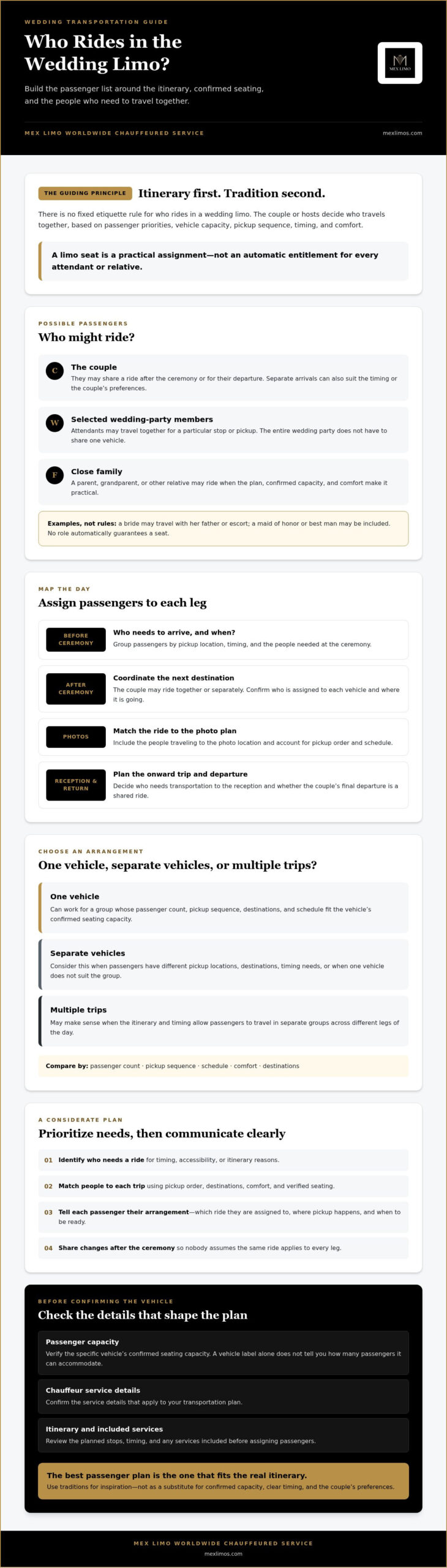
How to plan the wedding limo passenger list and itinerary
A clear itinerary turns “who rides in the limo for a wedding” into a series of practical decisions. Plan each trip separately, since the passengers and vehicle that suit the ceremony ride may not fit the couple’s photo, reception, or return plans.
- 1. Map the schedule. List the stops that matter to your plans, such as getting ready, the ceremony, photos, the reception, and return transportation. Add pickup times and locations, and allow workable time for boarding and transitions without relying on a standard travel buffer.
- 2. Identify passengers for each leg. Assign names or clearly defined groups to each trip. Note whether you want a shared arrival or separate arrangements, and include anyone with accessibility or comfort needs.
- 3. Check vehicle capacity. Match each passenger group to a vehicle only after confirming its seating capacity with the provider. Don’t estimate based on the vehicle’s appearance or assume the same vehicle will suit every part of the itinerary.
- 4. Confirm the details. Review passenger names, pickup sequence, destinations, vehicle choice, and timing with the transportation provider. Make sure everyone knows where they need to be and when.
What details should couples decide before booking?
Prepare a concise trip outline before discussing vehicle options. For each leg, note who’s traveling, where the pickup and drop-off points are, and the planned timing. Include any accessibility needs, whether the couple will travel together, and which stops are actually part of the day. A complete outline helps the provider assess the plan instead of guessing at passenger counts or trip order.
Ask the provider to confirm the specific vehicle’s seating capacity and whether the proposed pickup sequence and timing are workable. If photos or a reception transfer aren’t part of your transportation plan, leave them out rather than adding unnecessary stops.
How should the transportation plan handle schedule changes?
Give the chauffeur a clear version of the agreed itinerary so the planned sequence is easy to follow. Choose one transportation contact, such as a designated family member or wedding coordinator, to communicate updates and keep messages consistent. If timing, passenger names, or stops change, share the update with the provider promptly and ask them to confirm whether it can be accommodated. Don’t assume an itinerary can be changed in real time without approval.
For chauffeured wedding transportation, review wedding limousine service details from Mex Limo Worldwide Chauffeured Service as you compare your passenger plan with vehicle and itinerary options.
Choosing wedding limo service for the passenger plan you want
Once your passenger list and itinerary are clear, compare providers by how well they can accommodate the actual plan. The right vehicle isn’t simply the one that looks most impressive; it should suit the group, pickup sequence, destinations, and comfort needs. Ask specific questions and get important details confirmed before finalizing the booking.
What should couples confirm with a wedding limo provider?
Share your requested date, passenger estimate, pickup points, destinations, and planned timing. Then ask:
- Which vehicle options are available for the requested date and itinerary?
- What is the confirmed seating capacity of the specific vehicle, and will the passenger group fit comfortably?
- What chauffeur service is included, and how will the pickup sequence and stops be handled?
- What service duration, package terms, or other inclusions are stated in the booking details?
- How should you communicate an itinerary update, and what changes require confirmation?
Request clarification on anything that isn’t explicitly described. For instance, don’t assume extra stops, waiting time, or a particular amenity is included unless the provider confirms it. A written understanding of the vehicle, schedule, and stated terms helps keep expectations aligned.
How does Mex Limo Worldwide Chauffeured Service fit into wedding transportation planning?
Mex Limo Worldwide Chauffeured Service offers wedding limousine services with professional chauffeurs, along with sedans, SUVs, stretch limousines, and passenger vans. These options can support different transportation plans: a sedan may suit a more private trip, while an SUV, stretch limousine, or passenger van may be considered for a group or a different itinerary. The best fit depends on the specific vehicle’s confirmed capacity and your passenger needs, so verify those details directly.
Before making a decision, compare the provider’s confirmed vehicle options with each leg of your schedule. A couple traveling together, attendants departing from one pickup point, and relatives with separate timing may call for different arrangements. Ask about availability for your requested date and confirm the itinerary and service details rather than assuming they’re included.
If your passenger list and timing are ready, discuss your wedding transportation plan with Mex Limo Worldwide Chauffeured Service and clarify which confirmed options may suit it.
Make your wedding-day transportation plan your own
There’s no required passenger list for a wedding limo. Decide who rides together based on your itinerary, confirmed seating capacity, and the comfort and timing needs of each group. A clear plan for pickups, stops, and destinations can also help you choose between one shared vehicle, separate vehicles, or multiple trips.
To answer who rides in the limo for a wedding, start with the people you want or need to travel together, then confirm the arrangements with your transportation provider. Mex Limo Worldwide Chauffeured Service offers wedding limousine services with professional chauffeurs and a fleet that includes sedans, SUVs, stretch limousines, and passenger vans. The company has operated since 2009.
Once you’ve outlined your passengers and schedule, take the next step. Discuss your wedding transportation plans with Mex Limo Worldwide Chauffeured Service and ask which confirmed options may suit your itinerary. With thoughtful coordination, you can move through the day feeling prepared and well cared for.
Frequently Asked Questions
Who traditionally rides in the limo for a wedding?
Traditionally, the couple may ride together, joined by selected wedding-party members or close family if the plans and seating allow. There’s no universal passenger list or rule requiring particular people to ride. The couple or hosts can decide based on the itinerary, comfort, vehicle capacity, and personal preference. Once the plan is set, tell each passenger where and when to meet so nobody is left guessing.
Should the bride and groom ride together in the wedding limo?
They can ride together, but it’s entirely optional. Some couples prefer separate arrivals because of ceremony arrangements, timing, or photo plans; others choose to share a ride for one part of the day, such as traveling from the ceremony to the reception. Decide what suits your schedule and the experience you want. Then confirm the pickup sequence, locations, and timing with your transportation provider.
Do bridesmaids and groomsmen ride in the wedding limo?
They may, but attendants don’t all have to travel in the same vehicle as the couple. The passenger count, confirmed seating capacity, pickup locations, and schedule all affect the arrangement. You might include selected attendants, arrange separate vehicles, or have some make their own transportation plans. Share the decision in advance, including who is assigned to each ride, so no one assumes a seat has been reserved for them.
Can parents or other family members ride in the wedding limo?
Yes, parents and other relatives can ride if the couple or hosts include them in the plan and the vehicle arrangement allows. Consider whether a family member has a role in the schedule, would benefit from traveling with others, or has a comfort or accessibility need. Confirm the specific vehicle’s seating capacity and communicate the arrangement directly. There’s no etiquette rule requiring parents or relatives to ride in the limo.
Does everyone in the wedding party need transportation?
No, transportation can be arranged for the people whose needs and schedules align with the itinerary. Some attendants may travel together, while others use a separate arrangement. Consider ceremony timing, pickup points, comfort, and the vehicle’s confirmed seating capacity before deciding. Communicate the plan clearly and early, including where each person should go and when. A coordinated arrangement is more useful than assuming the entire party must travel together.
How many people can ride in a wedding limo?
The passenger count depends on the specific vehicle and its confirmed seating capacity. Don’t rely on a generic estimate, the vehicle’s name, or a photograph when assigning seats. Ask the transportation provider to confirm capacity for the exact vehicle being considered, then check that it suits the group and itinerary. If the passenger list exceeds the confirmed capacity, ask about separate vehicles or trips instead of assuming everyone can fit.
When should we decide who rides in the wedding limo?
Decide once the schedule, pickup locations, and transportation needs are taking shape, before confirming the vehicle arrangement. This gives you time to verify seating capacity, coordinate separate rides, and let passengers know what to expect. Before the wedding, review the names, pickup sequence, destinations, and timing with the provider. If the schedule changes, share updates promptly and ask the provider to confirm any revised arrangements.